

After a promising start walking from the town into a valley and up the other side in oak forests, it all went pear shaped for the next 28 km. All roads, minimal scenery other than the above photo. Ourense is the biggest town since Salamanca, and the extended entrance was via the industrial suburbs. The city has a reputation (and nickname) of being a frying pan, and although it was a nice day, nothing was frying at this time of year!
Being a shorter day, I arrived in time to explore the old town. Ironically, all the folks that left at the crack of dawn achieved very little as check in was only available from 1300. I’d had a leisurely coffee until 0830 (when it was light enough to navigate), stopped for another leisurely coffee mid morning, and rocked up to the albergue at 1305. Tomorrow may be more if the same, as all these albergues seem to have the same 0800 eviction hour.
Despite the less than inspiring scenery today, there were many things worth observing. One is the significant number of new or near new stone houses. And not modest homes either, but large 3 storey monster homes by Spanish standards. It makes me wonder whether they are subsidized to prevent stone masonry becoming a dying craft! The other thing worth referencing is the age of some of these villages (hamlets might be a better description). In one we passed through yesterday, they unearthed a menhir which was dated to 1,000 BC. The actual artifact was nowhere to be seen, but is probably safely stored in some national museum (or the basement storage thereof).
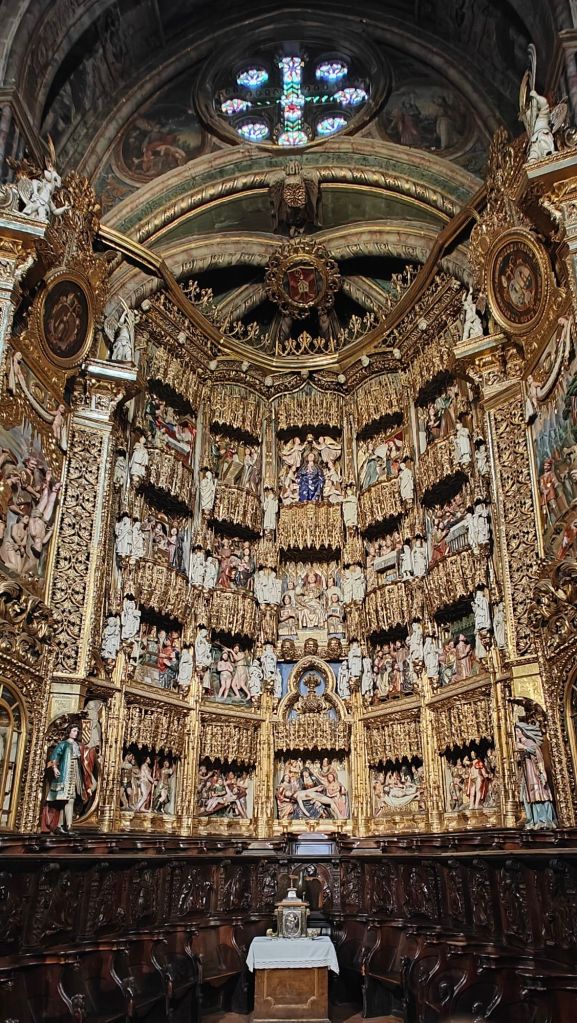
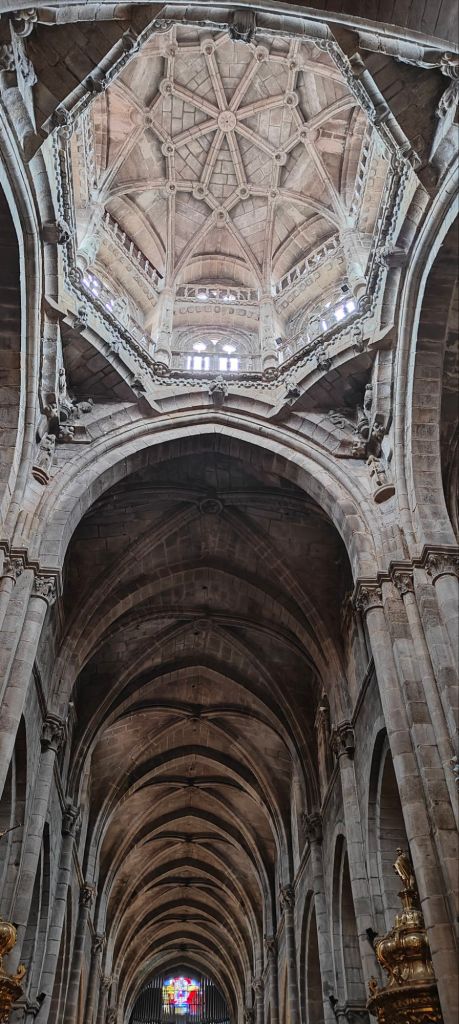
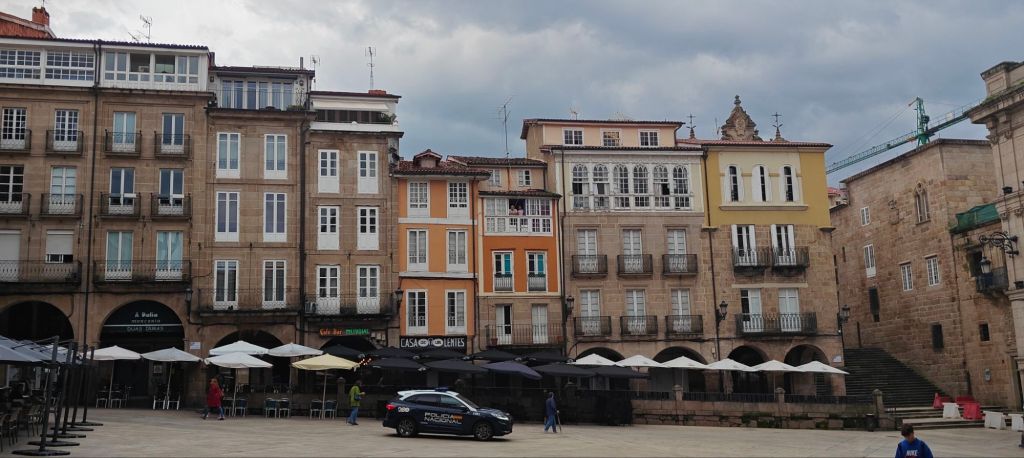
Ourense has been around since well before the Romans showed up. It has a strategic location on the river Minho, which for much of its length forms the border between Spain and Portugal – which we crossed by motorized dinghy in the fog when we walked the Camino Portuguese. It also has natural thermal pools, but I wasn’t sure if they’d appreciate me showing up in my now battered Lulu running shorts. The old town is quite compact, with the highlight being its Cathedral, built from the 11th C onwards, and if one melted down all the gold leaf the church in Rome wouldn’t be destitute any more!


 2saunter